Pedestrian access explained
One-Way vs Bidirectional Turnstiles: What Changes for Users?
A one-way turnstile lane serves passage in one direction. A bidirectional lane can serve passage in either direction, according to its available controls and operating mode. Bidirectional does not mean that two people can cross the same narrow lane in opposite directions at the same time.
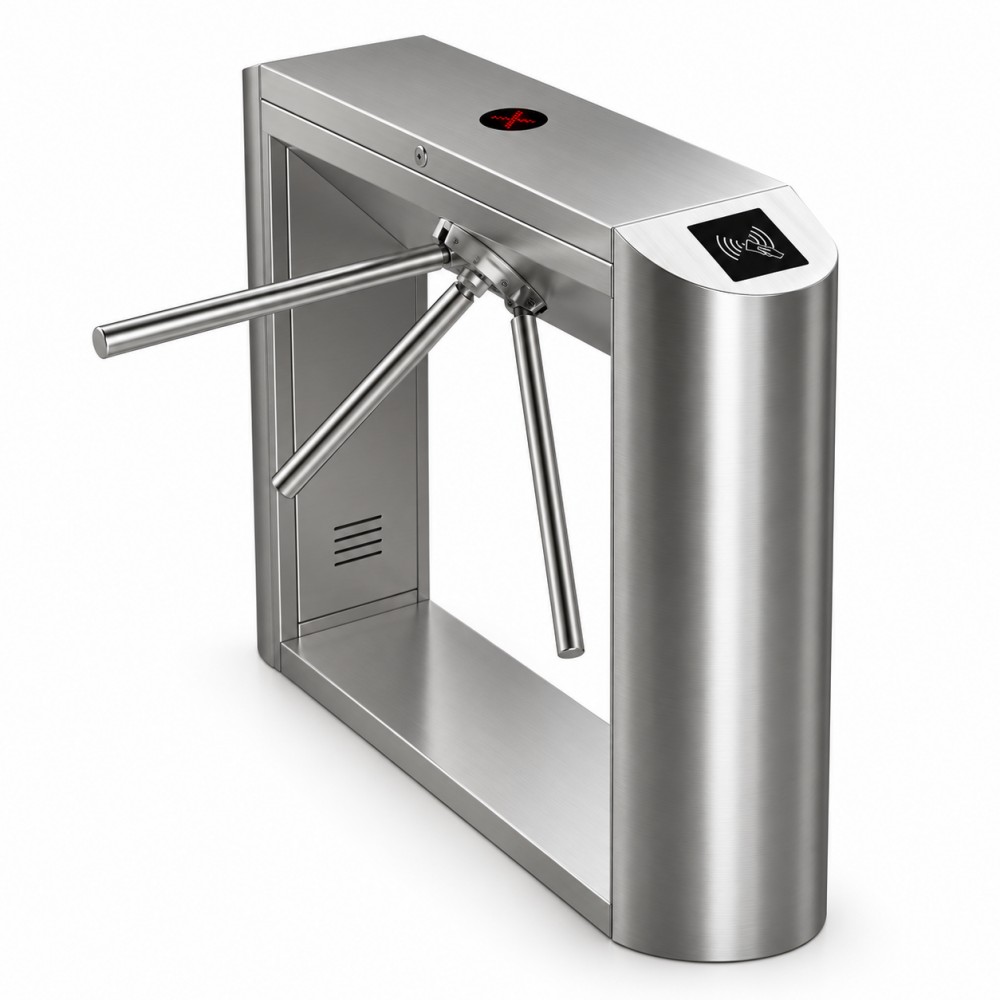
Direction and permission are different
Direction describes where someone travels. Permission describes whether that person may pass. A bidirectional mechanism may still require a valid credential in both directions. Alternatively, an offered configuration may control entry while allowing ordinary exit without a credential. Those are different settings, not meanings built into the word bidirectional.
A manufacturer example makes the distinction concrete: the Gunnebo Metro Tripod Turnstile data sheet describes independently configurable directions with reader-controlled, locked and unlocked modes. This illustrates the terminology for that manufacturer’s product; it does not establish which modes any ZIBOR PARK model offers.
What changes for users?
In a dedicated entry lane, a person approaches from the entrance side and the opposing side is not used as a normal exit. With a shared bidirectional lane, someone leaving can approach the same passage from the other side. The user needs to understand whether the lane is available before presenting a credential and starting through.
Two people approaching from opposite ends still compete for the same physical space. Direction indicators and the actual gate response help communicate whose turn it is, but the word bidirectional alone does not specify that response. Nor does it promise a particular throughput or eliminate waiting.
Reader placement is a separate practical difference. Controlled passage in both directions may need an identification point on each approach. A visible reader on one cabinet end does not prove that the other end has the same equipment or that exit identification is included.
One shared lane or separate entry and exit lanes?
A shared passage gives users a route in either direction at different moments. Separate entry and exit passages make the ordinary direction easier to recognise and let opposing users approach different openings. The appropriate choice depends on how people actually arrive and leave; a photograph cannot supply that traffic information.
For example, a small staff entrance with occasional arrivals and departures presents a different question from a venue where a group is leaving while another group arrives. This is a comparison of user experience, not a capacity calculation or a lane-layout instruction.
Direction is also separate from width and gate format. A wider swing lane, a tripod mechanism and a full-height rotor differ physically even if their descriptions all mention bidirectional passage. Compare the pedestrian access formats for those differences.
What a photograph cannot establish
Arrows, reader pads and cabinet shape can suggest how a lane is intended to be approached. They do not establish the offered controller’s complete operating modes. A useful supplier answer names the mode actually available for the offered equipment instead of relying on a generic product-family label.
Normal direction control also says nothing about an approved emergency exit. This article concerns everyday passage only. It does not provide emergency-release instructions or claim accessibility, evacuation or local-code compliance.
Common questions
Does bidirectional mean two lanes?
No. It describes the directions a lane can serve, not the number of physical passageways.
Is free exit the same as bidirectional access?
No. Free exit describes permission in the exit direction. Bidirectional describes the ability to serve both directions.
Can a one-way entrance have readers at both ends?
Reader appearance alone is not enough to decide. The installed equipment and its configured mode determine which approaches are actually used.